

Camp in USA: American camps
Camp in the USA
Spend the summer in the USA working at summer camps. Help create fun days for kids, improve your English, and enjoy the outdoors. Choose a role: counselor or support staff!
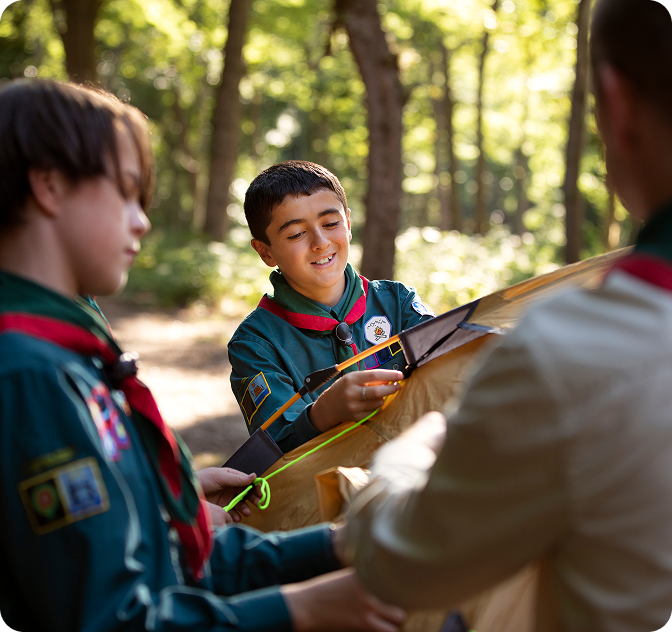
Camps are usually located outside town — in the woods, by a river or lake, or sometimes by the ocean. People come to camp to relax and have fun, so you’ll always find lots of games and everything for arts and crafts, sports, water activities, and more. Of course, offerings vary from camp to camp depending on the type, but the general idea is the same: free time can be active and rewarding (bike rides, kayaking, archery, etc.). Campers usually live in wooden cabins (after all, they wanted to be closer to nature!): groups of 5–15 campers, together with 2–5 counselors, usually sleep in the same space. Support Staff may have a separate cabin, or they might live with the kids. In any case, each cabin has a shower and toilet, liquid soap and paper towels — staple features of American WCs. Toilets are clean, not wooden, and of course not outdoors; at worst they’re in a separate building (Americans still haven’t quite gotten closer to nature… or maybe they’ve gone too far away from it). Participants are given days off (1–2 days a week, depending on the camp). Typically, those whose days off line up team up for trips into “civilization”.
Girl/Boy Scout Camps (guides) — camps for girls / boys. These camps usually have a very packed schedule; kids are constantly learning, being entertained, and taking part in activities and training (there are camps just for girls, just for boys, or coed).
Religious camps — a regular program with added religious talks and some ritual elements. There are many Christian and Jewish camps.
Special needs camps — camps for children and adults with mental and/or physical disabilities. As you may know, the U.S. places a strong emphasis on accessibility for people with disabilities, so there are many such camps, and if you mark on your application that you’d like to go to one, you’ll be placed there 99% of the time. What’s more, a counselor’s stipend at a Special needs camp differs from a regular counselor’s stipend. What can you expect at such a camp? A common motto at camps for people with disabilities is “We welcome everyone, from 8 to 80.” That means adults often attend alongside children. The degree of disability can vary widely — from simply being especially restless to paralysis. Counselors always receive training in caring for campers. You don’t need to provide medical treatment yourself — there’s a nurse on site around the clock. The counselor’s main job is to make sure the camper takes part in all camp activities and doesn’t get bored. As a rule, the schedule at these camps is not very tight and is flexible.
Private / independent camps, agency, family owned camps — depending on ownership, camps can be privately run or belong to associations (for example, the YMCA).
Day camps — kids come in the morning and go home in the evening.
Disadvantaged camps — camps for children from troubled or low-income families.
Each program participant can indicate on their application the type of camp they’d like to attend. Note that the less picky you are and the more boxes you check, the higher your chances of getting a camp and receiving a placement. Keep in mind that placements in day camps and disadvantaged camps are very rare.
The job of counselors in American camps is much the same as at home: they look after kids, teach them different sports, and generally make sure every day is fun and packed with activities. To work as a counselor you need a good command of English, preferably some experience working with children, and—cliché as it sounds—you need to love them, since the job means you’ll be with them almost round-the-clock for at least 2 months! No special skills are required, but if you do have any (for example, playing guitar, horseback riding, archery, a sports qualification, etc.), they’ll be definite pluses.
Support Staff helps organize the camp’s day-to-day operations. Typically these are kitchen roles (dishwashing, kitchen help, serving breakfast, lunch, and dinner) or maintenance (minor repairs, grounds upkeep, electrical work, etc.). Work experience isn’t required, but it’s definitely a plus—especially if you’re applying for a tech role.


